





Backyard investments: How ADUs offer value as affordable housing options
Today on “The Building Code,” Charley and Courtney are connecting with Cameron Meredith, partner and director at ADU West Coast. With over 18 years of experience as a licensed general contractor, Cameron leads a team dedicated to creating affordable housing solutions through expert design and construction. He oversees daily operations, project management and client guidance, ensuring a seamless ADU development process from concept to completion.
Listen to the full episode to hear about the growing demand for ADUs, the financial and lifestyle benefits they offer and how they contribute to solving housing crisis.
ADUs are big in California. Are you seeing them expand to other cities across the U.S.?
“I’m seeing ADU laws being implemented throughout the country. I think even Lincoln, last time I was there, is implementing some ADU stuff as well as Omaha. So, no matter where there’s bigger cities, there’s density problems. And I think the West Coast, as far as Oregon, Washington, California, I know Texas is doing a lot. I think a lot of cities are looking at these laws and implementing them.”
What are some of the changes to the ADU handbook for 2025 that builders should be aware of?
“So, a couple big bills, the one that I mentioned is about the multifamily is called SB 1211, and you’re allowed to build up to eight ADUs if you have enough room on your property. If you have two units, you’re allowed two ADUs. If you have four, you’re allowed four. Again, you can’t go higher than eight. But what that really does is create a lot of more rental properties. Another one is an ADU amnesty program. I believe that’s AB 2533, and that makes it a lot easier for ADUs built before Jan. 1, 2020, to get up to code and legalized.”
Links and more
Learn more about ADU West Coast.
The latest State of the Residential Construction Industry report is out now!
- Learn systemized processes for driving profitability
- See why financial literacy is an opportunity for growth
- Understand how prioritizing planning leads to long-term success
Get your free copy – and see what’s shaping residential construction in 2025.
Related content:
Tune in to the last episode to hear from Lucas Comstock, owner and superintendent at JC Builders, on how he’s using Buildertrend’s Group Purchasing feature to save with cashback and discounts.
Subscribe here and never miss an episode.
Got podcast topic suggestions? Reach out to us at podcast@buildertrend.com.
The Better Way, a podcast by Buildertrend:
Looking to add construction tech to your daily processes? On the newest season of “The Better Way, a podcast by Buildertrend,” you’ll get best practices for implementing software and getting your team on board from other industry pros and our experts. Subscribe and stream today wherever you listen to podcasts.
Follow us on social:
Listen to “The Building Code” on YouTube! And be sure to head over to Facebook to join The Building Code Crew fan page for discussions with fellow listeners.
Charley Burtwistle (00:05):
What is up everybody? Welcome back to another episode of “The Building Code.” I’m Charley Burtwistle.
Courtney Mattern (00:10):
And I’m Courtney Mattern.
Charley Burtwistle (00:11):
Courtney, how the heck are you doing today?
Courtney Mattern (00:14):
I’m doing great. We are just finished up the Builders’ Show. We just got back from Las Vegas. How are you feeling?
Charley Burtwistle (00:20):
I’m also feeling great. Those are the only two options I give myself every day is either good or great, and today’s a great day.
Courtney Mattern (00:25):
You only give yourself two choices?
Charley Burtwistle (00:27):
Yeah.
Courtney Mattern (00:27):
I’m going to have to hack. I’m going to steal that idea. I feel like really proud of myself coming back from the Builders’ Show and having any energy or life. A lot of people came back with colds or flues.
Charley Burtwistle (00:37):
Yeah. I’m rejuvenized was filming a little recap video yesterday, and I said that the Builders’ Show is always the most inspirational and motivational thing I attend for work, probably in my life actually all year. It’s just so cool to be surrounded by literally hundreds of thousands of people that are like-minded and they’re wanting to get better and they’re trying to learn. The booth is buzzing, the energy’s high. It’s just fantastic. I came back ready to go, ready to Buildertrend better and make the world a better place.
Courtney Mattern (01:08):
How many people were like, “It’s Charley from the podcast.”
Charley Burtwistle (01:11):
One.
Courtney Mattern (01:12):
One.
Charley Burtwistle (01:14):
But that’s one more than anybody else in the booth got.
Courtney Mattern (01:17):
Were you happy we finally let you out of the building?
Charley Burtwistle (01:19):
Exactly. And the person that recognized me also asked to take a picture with me, and people saw him, asked to take a picture with me, so I got some credibility.
Courtney Mattern (01:25):
So, there’s proof.
Charley Burtwistle (01:27):
Exactly, here around the office.
Courtney Mattern (01:29):
I’m impressed. Well, I’m glad. We’re glad to be back in the studio, but until next time we get to see all of our customers in person. That’s always the best part.
Charley Burtwistle (01:36):
Exactly. And we have a fantastic guest who I actually got to meet at the Builders’ Show. People that have been listening for a long time know that I do zero of the actual work on the podcast. I just show up and talk. So, I don’t know who our guests are going to be. I guess I could look into my calendar and see.
Courtney Mattern (01:52):
Yeah.
Charley Burtwistle (01:54):
But this guy came up to me, he is like, “Hey, I’m going to be on ‘The Building Code’ next week.” I was like, “No way.” And today is the day, the aforementioned day that he is on The Building Code. So, Courtney, who do we got today?
Courtney Mattern (02:03):
Yeah, we have Cameron Meredith. He’s a partner and director at ADU West Coast. I have a small obsession with ADU’s. I think you shared the same obsession, Charley. So, anytime we can get to talk about accessory dwelling units, we will do it. He is out of Seal Beach, California, and it’s really interesting with ADU’s and how different the building process is from region to region, whether it’s permitting or city laws or challenges of being by the ocean or digging into rocks. So, I’m excited to talk to him about things that have happened in California, where they’ve had a huge boom in ADU’s some of the challenges that he’s had and what trends he’s looking forward to in the future.
Charley Burtwistle (02:44):
Absolutely. Well, without further ado, let’s get him in here. Hey Cameron, welcome to “The Building Code.” How’s it going today?
Cameron Meredith (02:51):
Pretty good, thanks for having me.
Charley Burtwistle (02:53):
Yeah, we are super excited to have you. Appreciate you making the time to join us today. For our listeners out there, we always like to start with just tell us a little bit about yourself, where you are, where you came from and how you got into construction.
Cameron Meredith (03:07):
Yeah. So, I’m born and raised in Southern California. I grew up in Huntington Beach. Funny enough, I went to college out the University of Nebraska. I know you guys are out in Omaha, so I have a bunch of friends and close acquaintances still out there. But after college I did study business management. Like a lot of college kids, I really didn’t know what to do after, so I was always in sales. Started at Solar City selling solar panels. After that, did some management at a Sears and then after that I got my real estate license. And while I got my real estate license, I did that for about five years, and I was doing flips and some larger remodels with a group that I liked.
(03:47):
And I figured that, “Hey, I was pretty good at selling some of these renovation remodel jobs.” So, I formed a team. My partner was a, they’re still my partners today, but one of them is an architectural designer. His brother’s a structural engineer and GC. So, we pretty much formed this group. We were doing large remodels custom homes, and then in 2020 we saw the laws change for ADUs, and that’s when we really focused on taking our design build concept and just focusing really on ADUs, it’s such a big thing here in California.
Charley Burtwistle (04:22):
Love that. I don’t want to get off track because we could spend the entire 30 minutes on this, but I am the biggest Nebraska football fan in the entire world. I’ve had season tickets my entire life, so some other time we can grab a drink and chop it up about your time in Lincoln.
Cameron Meredith (04:35):
For sure. For sure. And I’ll come out there for a game, so we’ll meet up.
Charley Burtwistle (04:38):
Oh, love that.
Courtney Mattern (04:39):
Absolutely.
Charley Burtwistle (04:40):
Well, yeah, goal for having you on today is talk a little bit about more about ADUs. I know they’re big on the West Coast and in California specifically, but for listeners across the nation, quick overview, ADU 101.
Cameron Meredith (04:53):
Yeah, so not to get into too much detail, these laws were enacted, like I mentioned, in 2020. The real reason is to provide more housing. Obviously, here in California, not only this state, but many other states, you’re seeing ADU laws being implemented. So, what exactly is an ADU? For just basic, I guess, explanation, it is a second or third living facility with a kitchen and bath. So, it has to have a kitchen, it has to have a bathroom. Now, here in California, people are converting their existing garages, whether it’s detached or attached, and they’re also building them out of the backyard. And a lot of the regulations that were passed in 2020 and thereafter just makes it a lot easier for people to convert either their garage or like I mentioned, build in their backyard. And really the whole concept of this, like I said, it’s really hard to just rezone property and basically go through that whole process.
(05:47):
So, throughout the state when they were passing these bills, they said, “Hey, look, everybody has a backyard.” A lot of these tracks in 1950s, 1960s have detached garages. So, it made perfect sense to convert some of these and pass these bills to allow people to build more housing in their backyard. And just to not get into too much off track here, but interesting enough, I find it really interesting, 80 to 90% of the ADUs we do for single family homes, because we work with a lot of investors, too, but most of those are actually a family member moving back. So, it’s either a young adult, right? Starter home in California is a million dollars. It’s crazy. So, it’s either a young adult or it’s an elder moving back with their family. So, I find that really rewarding and a lot of listeners might find that shocking because a lot of people, at least here, think they’re going to be rentals and there’s going to be more cars in the neighborhood, which actually a lot of those families already live in that property, which I find interesting.
Courtney Mattern (06:42):
We’ve talked at ADUs on “The Building Code” before. Whitney from SNAP ADU has been on, I think she’s up in the northwest. What’s really interesting to me is just region by region because the laws and the regulations are different. And if you know me, I love a good stat.
Charley Burtwistle (06:57):
Here we go.
Courtney Mattern (06:57):
So, looking at the stats from California, between 2016 and 2022, California saw a 15000% increase in ADU permits totaling almost 84,000 units. By 2024, California had one ADU for every 441 residents. What has it been like in the market there and did you feel like you came on early to the rise of ADUs? Did the opportunity just, was it screaming in your face or was it as evident?
Cameron Meredith (07:29):
It really was. I kind of saw the writing on the wall and I was one of the early adopters of switching our company to just specialize in ADUs. And there’s a lot of good ones, there’s also a lot of bad ones. So, it’s a mix just like anything. But really kind of how I started my journey in this is I really understood those laws and being in real estate, I made a custom PowerPoint specific to the laws and whatnot. So, I got a lot of business just educating realtor groups or different investors. I’d speak in front of rooms of 50 to 100 people and just basically educate them on ADUs. And from that point I’ve kind of guided myself as the expert in the local area, which is nice.
(08:14):
But yes, I’ve seen this thing explode ever since 2020 because that’s when really these laws changed in favor as far as lifting regulation. And every single year I just see more and more and more demand for these ADUs because like I said, the biggest problem is not a lot of people can afford a million-dollar starter home and right now, 6%, 7%, it just doesn’t make sense. And a lot of those people aren’t selling their homes because they don’t want to go into a 7% rate. So, I just think it’s both the real estate climate here and then the laws in favor, and people realizing, because here’s the thing, you can build a garage conversion for around $160,000 and nowhere in California can you find a property for $160,000. I don’t care where you go.
(09:00):
So, it’s really kind of, I guess, makes sense for this area because of how crazy the housing is. And, on that, I did a presentation the other day, I’m seeing ADU laws being implemented throughout the country. I think even Lincoln, last time I was there, is implementing some ADU stuff as well as Omaha. So, no matter where there’s bigger cities, there’s density problems. And I think the West Coast, as far as Oregon, Washington, California, I know Texas is doing a lot. I think a lot of cities are looking at these laws and implementing them in their cities as well.
Charley Burtwistle (09:30):
Yeah, you beat me to my question there. I was getting ready to ask if you knew what laws looked like in Omaha.
Courtney Mattern (09:35):
Is it time? Can I build an ADU?
Charley Burtwistle (09:37):
Yeah.
Cameron Meredith (09:38):
You know what? I don’t know the specifics of it, but I did read an article the other that there are starting to implement some sort of laws.
Courtney Mattern (09:45):
The investment makes sense.
Cameron Meredith (09:45):
I’m sure if you go on the Omaha City website, there’ll be some specifics there for that.
Courtney Mattern (09:50):
The investment makes sense for homeowners especially because like you said, the cost and accessibility and attainability of starter homes in bigger cities. It’s an issue for families of course. But what is the business appeal to for companies like yours working in construction? How has it made business sense?
Cameron Meredith (10:09):
Well, it makes business sense in the fact that there’s so much work rather than… Because the demographic, let’s say the Midwest, there might be a lot of spec home builders or custom home builders, right? Out here there’s just not enough land. So, it’s either remodels with existing property or ADUs. And like I said, we have, as far as our business goes, we have a pretty good mix as far as investor versus homeowner. We’ll always work with homeowners. I think investors are a little bit easier, homeowners there all the time. They might change their mind on stuff, which is okay. But as far as us, we like working with investors, and I think one of the biggest things that was implemented in the last year, which I know you guys were going to touch on, but there’s a huge multifamily law that was passed in 2025 starting this year.
(11:02):
And you’re now allowed to build up to eight ADUs on your multifamily property. Now, I know we don’t have time, I’m not going to get into specifics of this, but that is a huge opportunity for operators and owners that own multifamily properties. So, throughout the state we’re seeing a huge influx in demand for not only single family but multifamily as well to provide more housing.
Charley Burtwistle (11:25):
That’s super interesting. I mean, construction has been around forever, and everyone does things a little differently, so we keep things new for sure, but being on the forefront of an emerging market like this is always really exciting. I’m sure for you, but even just for me right now, talking to you is cool. With everything as great as it sounds, I’d love to hear the other side of the coin. What are some of the challenges that comes with building ADUs as opposed to kind of the standard home build or remodel that you would be doing otherwise?
Cameron Meredith (11:59):
Well, it’s the same process. So, whether we’re building an ADU, or we’re building a 4,000-square-foot custom home, the same inspections, the same submittal processes. Now, you’re going to have a little bit easier in the planning portion since it’s a little bit different as far as regulation goes there. So, a little bit easier in the planning, but the building will be the same as far as the processes and stuff like that. I will say one thing that at least I’m speaking for my local area can get better at is there is a lot of red tape still. And a lot of people like to blame the cities, which some cities are better than others, but I get it, they don’t want to be sued. The problem is they got many different departments, and a lot of those people don’t talk to each other.
(12:46):
So, you’re submitting plans, and this really should take less than a month, maybe a couple of weeks to submit an ADU. But what happens is depending on your jurisdiction, you got to go to public works, then you’re transferred over here, then you’re transferred over here, and a lot of those people don’t talk with one another. So, again, depending on the city, some are more difficult than others. I think there really needs to be a change in streamlining this. And trust me, a lot of these bills that are passed in California tries to streamline a lot of that, but there’s still a lot of ways to go there.
(13:18):
And I think if we were able to just bring this in one or two departments, it should just be planning and building instead of going into public works and this and that, it just really slows down the project and the approval process, which again, I’m hoping that we can make this better. One thing I’ve been seeing online on Twitter or X, those fires that just happened in the Palisades and Altadena, actually one of our projects burned down over there was finished. So, interesting enough, if you look online, a lot of those people are complaining about the same stuff. You got to go to 20 different departments, this person has to sign off. So, I think if we were able to figure that out, it’d really help with the building and it really helped speed things up, but it’s going to be a work in progress.
Courtney Mattern (14:02):
What improvements have you seen in the last few years? What wins have you had as someone who is building several ADUs at a time?
Cameron Meredith (14:12):
Well, it might sound like a Buildertrend ad, but I had this conversation the other day. I’ve really changed our complete operations and systems on how we operate, and I couldn’t do it without a good software like Buildertrend. I’ve pretty much dived all in from cost coding to everything, and I’m still learning every day. But we started with the Daily Logs, the pictures, it was more level one. But I fully invested not only myself, but training my crew because I think that’s probably one of the most important parts is training everybody you work with on Buildertrend as well. And I think we’re at that point where it’s starting to really come together, but there’s no way, I mean, we do anywhere from 20 to 30 jobs a year, there’s absolutely no way I could do that without proper software and without proper systems in place to help me with that amount of work.
Courtney Mattern (15:01):
I love hearing that it gives you a leg up. You’re facing maybe other systems and processes that are inefficient, but you found your own ways to become as efficient as possible on your end. Tell us a little bit about the ADU handbook changes for 2025. What major updates would you recommend other builders are staying on top of if they’re interested in getting involved in ADUs?
Cameron Meredith (15:25):
For sure. So, a couple big bills, the one that I mentioned is about the multifamily is called SB 1211, and you’re allowed to build up to eight ADUs if you have enough room on your property. So, not to get into too many specifics, but you can’t build more than your existing count. So, if you have two units, you’re allowed two ADUs. If you have four, you’re allowed four. Again, you can’t go higher than eight. But what that really does is create a lot more rental properties for some of these owners. As I mentioned, they don’t have to demo anything on the lot. A lot of these people have open space to build those. Another one is an ADU amnesty program. I believe that’s AB 2533, and that makes it a lot easier for ADUs built before Jan. 1, 2020, to get those up to code or up to date and get them legalized.
(16:21):
Again, I’m not going to go into specifics that I could talk about that for a while. Another big one is SB1077. That’s the coastal zone ADU guidance. For those of you in the Midwest, we have something called a coastal commission, which is just another bureaucracy that you have to go through when you’re near the water. This simplifies basically the requirements for ADUs and junior ADUs. We did one, our office is here in Seal Beach. We just did one where it was in coastal commission, and it took us about a year just to pass coastal commission.
Courtney Mattern (16:52):
Wow.
Cameron Meredith (16:52):
So, that’s kind of the stuff I’m talking about. They’re trying to make it a little bit easier, so that should help out. And then the other one that we’ve actually kind of piggybacked off of is AB1332, which is pre-approved ADU plans. Each city has to offer a streamlined set of plans. So, right now, we have four plans in the city of Mesa being approved. I got two plans in the city of Downey being approved, and I just met with the city of Buena Park to try to get our plans approved. So, that’s kind of my goal this year is getting our plans approved in different cities throughout Southern California. A lot different than Omaha. We probably have 90 cities within this general greater area, so it’s going to be quite a mission to go to every city, but that’s what I’m trying to do. And I would say those are probably the three biggest bills that were passed that’s going to help the production for ADUs.
Charley Burtwistle (17:45):
That’s super interesting, and I’m glad you mentioned the plans because that’s a really natural segue to my next question here. On the side here, I’m just scrolling through your website right now, and the different types of where the ADU can go with the garage conversion, the standalone basement or addict or over the garage. Are you doing all of those right now currently? Are there plans for each of those and if so, what are some of the kind of unique challenges that come with? I would imagine a garage conversion is very different than a standalone unit.
Cameron Meredith (18:15):
A hundred percent. So, we do offer, regardless of whether they’re improved in cities or not, we have a template of 10 pre-engineered plans. Those will only work with free-standing structures because anytime we do a garage, it’s existing conditions we have to work around. So, our purpose was to offer these 10 plans to these cities. And like I said, as long as you’re not on a hillside, and it’s a pretty normal lot as far as flat, most of these plans will pretty much work anywhere throughout the state. So, that’s kind of our goal is to make it easier for people. Now, with garage conversions, like I said, you have different conditions, so you can’t really have a set of plans. The one that we really don’t see a lot of out here is the basements or the attics.
(19:02):
Number one attics, you have to have a certain height space, so that becomes an issue. But funny enough, we are about to complete one in Highland Park, which is East LA really hilly area, and that’s almost like a tiered structure with a basement. So, that would be our first ADU basement that we’ll do. And honestly, I don’t see much of those, so it might be our last. But other than that, all the other ones are pretty common. I would say the garage conversion is the most common just due to the cost being the most cost-effective. And then the two-story ADU ends up being the most costly. So, we don’t see a lot of those. It’s usually garage conversion or a free-standing.
Courtney Mattern (19:55):
I think it’s really interesting, all the regional differences and how different it’s building in different states.
Cameron Meredith (19:55):
Mm-hmm. That’s what I was thinking too.
Courtney Mattern (20:01):
Whether by, I think this is an interesting conversation at the beginning of the year we talked to the president of NAHB and just there, they lobby the government at many levels ,and this is why it’s important to stay in tune with your local laws and how it affects your business. What changes would you like to see in the future to make things even better? I know you talked about maybe easier permitting, fewer steps to go through on that end, but moving forward, what was your ideal state?
Cameron Meredith (20:36):
Yeah, honestly, I think it all comes down to making it easier to permit. I think that’s really the bottleneck for this. And like I said, there’s some cities that are better than others, but I think if we can really streamline this and just break it down to where we don’t have to go to all these different departments to get signoffs. And like I said, I get it, cities get sued all the time and they’re trying to protect themselves. So, it’s kind of a double-edged sword to figure out where this would work. But I would say as far as, and most builders will tell you this in California, that cutting a little bit of the red tape and regulation is going to really help with housing production and then help with our housing inventory. So, I would say that’s definitely probably the top of all the issues here in California.
Courtney Mattern (21:22):
As more builders jump on this trend of building ADUs and as someone who is early on the forefront and cares about excellence, what are some things, quality wise, that you would urge all builders to keep in mind when building these ADUs? Because I think when they first started coming on the scene it’s like, “Oh, you are just building an Airbnb or an income property.” But it’s important to build lasting structures. What’s top of mind for you as far as quality and making sure that you’re setting your builds apart?
Cameron Meredith (21:53):
So, the quality. So, we follow Title 24, so which is a California compliant, the quality is always good. We always leave, number one, the stucco or siding has to match the front, same with the roof. So, whatever the front house is, we got to match the back. Now, interior, we leave it up to the client. We have a spreadsheet of about 25 selection items, we budget per line item, and they select those. Now what I will say is I’m a firm believer in, because we do design build, and I think that’s one of our strengths because we can kind of foresee stuff in the build and in the design as well. And I think with ADUs, one thing to think about is these spaces are very small, so you’re not going to have a dining table.
(22:38):
So, I think it’s very important to plan either a peninsula that comes out with tabletop seating or an island if you can fit it within there. So, it’s little things like this noting where the closets go, maybe putting your washer and dryer in a closet, stuff like that. Also, exterior, you might want a porch outside California has great weather. You might want to put chairs out there. So, I think just overall thinking about number one, why are you building the ADU? That’s a big question for me. Are you building it for your family member? Is grandma moving in or are you going to use this as a midterm rental for traveling nurses? So, a lot of these whys kind of help us guide them on, “Hey, here’s what I recommend, here’s what I think you should do.” Etc. Sorry, my light just turned off. But yeah, the design portion is huge for these, and we do a big part of that as well.
Charley Burtwistle (23:33):
I’m obsessed.
Courtney Mattern (23:34):
I know. I want an ADU so bad. I think for a while yet, to your point, I don’t think it was allowed in Omaha, but I think rules have changed to the point of I’ve seen other builders who are doing design build in more wide-open spaces like Meg Billings in Idaho. You can build a brand-new house that has the granny suite. But when you’re in a city, like you said in California where it’s 90 cities in such a small area, how do you build a home that makes sense? And then it’s so reassuring to hear about, “We have quality builders using Buildertrend.” Trying to be able to talk to builders like you who are doing it right and are being intentional and using your great skillset and business sense to build homes that are going to last for whoever’s going to be staying in them is really reassuring that we’re heading in the right direction.
Charley Burtwistle (24:21):
And it’s just always cool to hear about the innovative solutions that people are coming up with and people like you, Cameron, are facilitating to solve the housing crisis and make sure people have places to live and affordable places to live I always think is pretty inspiring.
Cameron Meredith (24:38):
For sure. And one thing, too, just to touch on, I went to the Builder Convention, I met you there, Charley, a couple other team members, which was great, but I’m really interested in staying on top of new products and just innovation and what’s going on. So, I like going to that show, but really for me, I think the future, we’re going to see a lot more modular type structures. So, I would say within the next 10 years, a lot of these builds are going to be modular. So, I’m trying to stand ahead of the curve there as well and partner work with some modular companies just to at least offer that as another option for us.
Charley Burtwistle (25:14):
Were there some booths out at the show?
Cameron Meredith (25:17):
There was a bunch. Yeah, we went outside. I’m actually an authorized Boxable dealer.
Charley Burtwistle (25:17):
Nice.
Cameron Meredith (25:21):
So, I talked to them And then I went around and talked to a couple other people. I had a networking event here the other day in California, and I just met a guy that does, I forgot the name of the company, but they do 3D printed homes and those are really cool. They do a lot of glamping, they do a lot of government contracts for unhoused and stuff like that. So, I thought that was pretty cool. But like I mentioned, I’m just looking at all this stuff and where this is going, and I really do think that modular is going to be a huge thing here in the future.
Courtney Mattern (25:52):
And people can say they heard it here first from you.
Charley Burtwistle (25:58):
Yeah, there we go.
Courtney Mattern (25:58):
The listeners, yeah.
Charley Burtwistle (25:58):
We need a prediction to come true on the podcast. I just saw the other day, they re-posted a recording from before the Superbowl where we predicted the Chiefs winning.
Courtney Mattern (26:06):
Oh, no.
Charley Burtwistle (26:07):
Actually, I don’t think I did. I think it was our guest.
Courtney Mattern (26:09):
Well, we had a Kansas City guest on, so …
Charley Burtwistle (26:11):
I know. I kind of had to.
Courtney Mattern (26:13):
We kind of had to.
Charley Burtwistle (26:14):
Stuck him in a hard place there.
Cameron Meredith (26:15):
Is that your pro team?
Charley Burtwistle (26:18):
Most people in Omaha, yeah, not necessarily me. I’m a fan of the game, fan of the Shield.
Courtney Mattern (26:23):
I’m a fan of any sport team that has concession stands.
Cameron Meredith (26:26):
Oh yeah, same here.
Charley Burtwistle (26:28):
Most of them.
Courtney Mattern (26:29):
I’m here for the snacks. That was my fantasy team name.
Charley Burtwistle (26:32):
I love that. Cameron, thank you so much for joining us today. I think we’re getting close to time here, so need to wrap things up. Any kind of closing remarks from you before we let you go?
Cameron Meredith (26:42):
Yeah, no, I just want to let you guys know our team loves Buildertrend. Like I said, we really implemented it to the full extent. I’m sure there’s more we can do with it, but we’ve been really happy. You guys have been great. The support team’s awesome. And yeah, anytime you guys want me to come on again, I’d be glad to share my knowledge maybe in a year or two just to see how things are going.
Charley Burtwistle (27:01):
There we go.
Courtney Mattern (27:01):
Yeah.
Cameron Meredith (27:02):
And just a little update.
Courtney Mattern (27:03):
When you come out to the Husker game. And then you can also check out …
Charley Burtwistle (27:05):
We’ll do a live recording in the Husker tailgate together.
Courtney Mattern (27:09):
I’ll definitely come to the Buildertrend office there and come see you guys and maybe we’ll go tailgate and stuff.
Charley Burtwistle (27:16):
For sure. Well, like I said, definitely let me know when you’re coming down because I’ll be at every game, so that’d be awesome to meet you again.
Cameron Meredith (27:22):
Perfect. Awesome. Well, thank you guys for having me. I really appreciate it.
Charley Burtwistle (27:25):
Yep, thank you so much Cameron. Have a great day.
Cameron Meredith (27:27):
All right, see you guys.
Charley Burtwistle (27:28):
Bye. Well, Courtney, we just heard from Cameron Meredith at ADU West Coast. Fantastic interview as expected. What did you think?
Courtney Mattern (27:38):
I loved it. And ADUs aside, while we know we would both love to nerd out more about whether or not we can put one in our backyard. I think this episode was a good example of how the cream always rises to the top, about how builders who are looking ahead at things or willing to be innovative or go outside of their comfort zone are always going to excel. Cameron shared so many examples of all the opportunity there is in California for builders who are willing to maybe make changes to their business processes or become more efficient and get on board the ADU train, but also how it doesn’t stop there. He’s seen a lot of growth in a lot of opportunity.
(28:15):
But he’s already looking to how can he continue to be efficient? How can he continue to take advantage of city ordinances changing or improving permitting processes? He’s always looking ahead because he’s willing to know that he can always get better. And I think that’s also what just sets Buildertrend builders apart in general is that they’re always getting better and that benefits all of us. It benefits their businesses, but it benefits the homeowners. The homeowners who are looking for building onto their property or having grandma come live with them or making some extra income. They’re making it better for everyone because they’re willing to take a leap and do better.
Charley Burtwistle (28:53):
Be better.
Courtney Mattern (28:53):
Be better.
Charley Burtwistle (28:54):
There is a better way and I’m just very, very thankful to get to be a small part of that. It’s exciting.
Courtney Mattern (29:02):
Yeah. What was your biggest takeaway from the episode.
Charley Burtwistle (29:04):
Courtney, my biggest takeaway was how much you love stats, and you dropped some big ones in there, 15000% growth from 2016 to 2022. One out of every 400 residents having an ADU. I mean, this wasn’t a thing five years … What time of year is it now? Six, seven years ago. And it’s just cool to see how quickly the industry can adapt to changing rates, to changing economics, to changing housing needs. And it’s just when there’s a problem, smart people figure out a solution to the problem and you get things like ADUs.
Courtney Mattern (29:45):
I was really reassuring, too, like you mentioned, the problem with a housing shortage or accessibility or affordability of homes, people always out there think someone else is going to come in and fix it or we’re waiting for the superhero or we’re waiting for the federal government to fix it.
Charley Burtwistle (29:58):
The superhero is me all over.
Courtney Mattern (30:01):
The solutions can be much more micro. It can be a business owner seeing an opportunity and making a change. It can be one city making the change that, “Hey, yeah, you can have an ADU in your property so that your retiring grandma can come live with you.”
Charley Burtwistle (30:01):
Yeah.
Courtney Mattern (30:14):
So, change is happening all around and everybody has the power to make a difference and solve some of these big problems the industry’s facing so …
Charley Burtwistle (30:20):
Be the change you want to be in the world.
Courtney Mattern (30:22):
Yeah.
Charley Burtwistle (30:22):
Right?
Courtney Mattern (30:23):
We’re so inspiring today.
Charley Burtwistle (30:24):
I know. Well, you were. I was just kind of mumbling over my words all tired here. So, glad you took the lead there. Buildertrend needs to get some ADUs just out in the parking lot then I could just live here.
Courtney Mattern (30:34):
That would be great for some quiet workspaces.
Charley Burtwistle (30:35):
Oh, I was thinking just live there and walk to the office.
Courtney Mattern (30:37):
You would, you already wake up at 3:00 a.m., you might as well just live here.
Charley Burtwistle (30:41):
Yeah, exactly. All right. I think that about does it.
Courtney Mattern (30:46):
Yeah. Until next time, make sure you rate, review and subscribe to the podcast. Email us, tell us what you’re liking. Follow us on TikTok.
Charley Burtwistle (30:54):
I’m really pushing for comments right now. I think that’s my, every month I’m going to push for something a little bit differently. March is the month of comments. So, if you see us on Instagram or TikTok or Facebook or anywhere else …
Courtney Mattern (31:05):
Just say hi, so that we don’t have imposter syndrome, we know that you see us or tell us what you like. Just say hello would be great, too.
Charley Burtwistle (31:13):
Yeah. Or tell us we are awful.
Courtney Mattern (31:15):
Yeah. Tell us if you don’t like what you see I guess.
Charley Burtwistle (31:18):
Lovers are going to love. Haters are going to hate. I’m looking for something kind of right in the middle.
Courtney Mattern (31:20):
[inaudible 00:31:20] asked for, yeah.
Charley Burtwistle (31:20):
All right, that will do it.
Courtney Mattern (31:20):
Until next time.
Charley Burtwistle (31:20):
I’m Charley Burtwistle.
Courtney Mattern (31:21):
I’m Courtney Mattern.
Charley Burtwistle (31:23):
Peace.
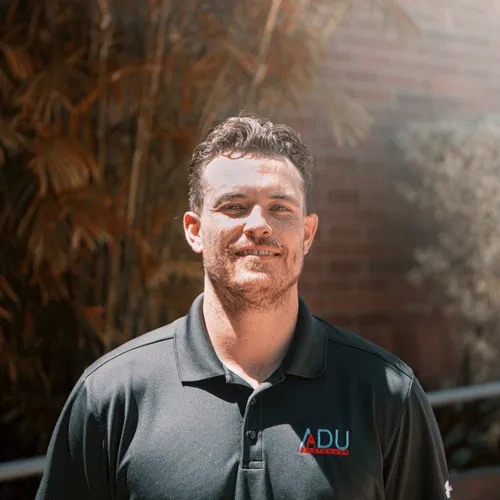
Cameron Meredith | ADU West Coast
Places You Can find us




We think you’d also like this
podcast
Jun 3, 2021Accessory dwelling units and the value of going Pro with Whitney Hill
Tune in to the full episode to hear Whitney’s insight on the growing popularity of ADUs and why upping your game with Buildertrend’s Pro features can help secure business success.

case study
May 21, 2020Shelter Solutions LLC: Onsite Consulting helps builder adopt time-saving features
Shelter Solutions LLC was using Buildertrend to its max. Or, so they thought. Read on to see how they got even more from this project management software.

podcast
Feb 8, 2024Big opportunity in tiny homes: Tapping into a new market
Listen to the full episode to hear more about why tiny homes are a great business opportunity at a time when people are open to new options in a limited housing market.