





Ghosts of the past: Giving old homes new life through historic renovation
This episode was recorded in 2024. Because Buildertrend continues to improve and expand its platform, some features or services mentioned may have changed.
On this Halloween episode of “The Building Code,” Charley and Courtney are chatting with Josh Waters, founder and CEO of Waters Building + Design. With over 25 years of experience in construction, Josh and his team have managed construction projects throughout the entire Southeast. They have a known reputation for excellence – especially when it comes to their historic renovations. They were awarded The Georgia Trust for Historic Preservation Excellence in Rehabilitation Award for their work on the Elizabeth Mirault House in Savannah, Georgia.
Tune in to the full episode to hear an inside perspective on bringing historic homes back to life – and maybe even a couple spooky stories.
What is the scariest part about renovating a historic home?
“Probably the scariest thing we sometimes find is, we uncover the walls, and we find out there’s really no beams or supports, from a structural side of things. And that’s scary because we have to tell the client that, ‘Oh yeah, this project that was going to be X will add 5% to that because we have to rebuild this part of the home.’ There was one project we did where there were three studs, three framing members that were intact out of a 20-foot wall section. And because of the historic nature of the property, we had to leave those intact. So, that was pretty challenging.”
Since it’s the Halloween episode, have you ever had any ghost encounters when working on these old homes?
“I will say they’re not confirmed ghosts, but we do have several properties that were interesting stories. Real quick side note of one, there was a ship captain that built a house for his family, and then behind the house built a carriage house. Well, when the captain was away at sea, the carriage house was rented out to different individuals. Well, long story short, the sea captain died at sea, so the family had to move out of the main house and into the carriage house. But what’s really odd, that sometimes if you’re on the garden level or lower level, it sounds like footsteps walking on the upper level above your head. And this was one that was built in 1856, so it’s got some age to it. And there’s probably a rhyme or reason to that, but it definitely sounds like footsteps when you’re standing downstairs. And it’s usually one, that Friday afternoon, no one’s around, no one’s on the sidewalk, no one’s on the street. So, it’s like, ‘What is that noise?’”
Links and more
Learn more about Waters Building + Design on their website.
Connect with Josh and his team on Instagram and Facebook.
Hundreds of construction business owners are seeing an average of 40% net profit increase using this construction budget template created by Breakthrough Academy. Download your free template today.
Related content:
Listen to the last episode to hear from Jim Tobin, president and CEO at the National Association of Home Builders, as he shares what shifts builders could see with the upcoming election.
Subscribe here, and never miss an episode.
Got podcast topic suggestions? Reach out to us at podcast@buildertrend.com.
The Better Way, a podcast by Buildertrend:
Looking to add construction tech to your daily processes? On the newest season of “The Better Way, a podcast by Buildertrend,” you’ll get best practices for implementing software and getting your team on board from other industry pros and our experts. Subscribe and stream today wherever you listen to podcasts.
Follow us on social:
Listen to “The Building Code” on YouTube! And be sure to head over to Facebook to join The Building Code Crew fan page for discussions with fellow listeners.
Charley Burtwistle (00:05):
What is up everybody? Welcome back to another episode of The Building Code. I’m Charley Burtwistle.
Courtney Mattern (00:09):
And I’m Courtney Mattern.
Charley Burtwistle (00:11):
And Courtney, happy Halloween.
Courtney Mattern (00:13):
Happy Halloween. Do you like my costume?
Charley Burtwistle (00:15):
Yeah. Are you dressed as a successful woman in tech?
Courtney Mattern (00:16):
Oh, I was just going for podcaster, but I’ll that instead.
Charley Burtwistle (00:21):
Oh, okay. There we go.
Courtney Mattern (00:22):
What’s your costume supposed to be?
Charley Burtwistle (00:24):
I’m supposed to be successful woman in tech, but apparently didn’t quite pull it off as well as you. Yeah. No, it is our Halloween episode. And what are we doing to celebrate our Halloween episode, Courtney?
Courtney Mattern (00:35):
We have a special guest on Josh Waters, founder and CEO of Waters Building + Design down in Savannah, Georgia. So, he’s been working in construction for over 20 years. And his company does new builds, but also historic renovations in the Savannah area. And he may or may not have some fun ghost stories to share with us.
Charley Burtwistle (00:54):
Absolutely. Well, as always, a huge shout-out to our production team and the people that find these guests for us. I’m very excited for today. Halloween may be my favorite holiday. I think it is.
Courtney Mattern (01:06):
It’s definitely my favorite.
Charley Burtwistle (01:08):
Yeah. You go all out with the costumes.
Courtney Mattern (01:10):
I really do. I think my best one, because we have a Halloween costume contest here at Buildertrend, is my Ted Lasso costume. I came in full send, with a mustache, with the aviators, the jogger suit. But little did I know, there was a half day executive meeting that I had to sit in on, and I just had to be really committed to the mustache.
Charley Burtwistle (01:10):
Yeah, absolutely.
Courtney Mattern (01:10):
All day.
Charley Burtwistle (01:31):
Did you reference it or just pretend it wasn’t there?
Courtney Mattern (01:35):
Yeah, I just dropped a lot of Ted Lasso-isms.
Charley Burtwistle (01:39):
Oh, perfect. Played into it.
Courtney Mattern (01:40):
Yeah, I played into it. I had the Believe sign taped on my computer.
Charley Burtwistle (01:44):
That’s awesome.
Courtney Mattern (01:45):
It was very motivational. What’s your best Halloween costume?
Charley Burtwistle (01:48):
Gosh, I went as Napoleon Dynamite when I was like eight. That one really sticks out to me. I’m not a big costume person, but maybe this year that’ll change. For the record, we are recording this a couple of weeks before Halloween, so if you’re watching on YouTube and we’re not in costume, and you want to call us out on our BS.
Courtney Mattern (02:09):
It’s not true. I’m in costume.
Charley Burtwistle (02:09):
Yes.
Courtney Mattern (02:10):
I’m a podcaster.
Charley Burtwistle (02:11):
There we go. But we will be soon. And maybe in the show notes we can drop a picture.
Courtney Mattern (02:19):
Yeah, we’ll drop a picture in the Facebook group.
Charley Burtwistle (02:20):
Oh, absolutely.
Courtney Mattern (02:20):
For all of our online listeners and all of our fans to run to the Facebook group, The Building Code Crew, and join in on the conversation.
Charley Burtwistle (02:29):
Well, do you have a sneak peek of what the costume is this year?
Courtney Mattern (02:32):
I haven’t decided yet.
Charley Burtwistle (02:33):
Okay. So, the only way to find out is to go check it out on The Building Code Crew on Facebook.
Courtney Mattern (02:37):
We’ll post it on Halloween.
Charley Burtwistle (02:38):
Okay, well, enough of that. Let’s get into our Halloween episode, and let’s get Josh in here.
(02:44):
Hey Josh, welcome to “The Building Code.” Really appreciate you joining us today. How’s it going?
Josh Waters (02:49):
Going great. Going great, and I appreciate you all having me today.
Charley Burtwistle (02:52):
Oh, absolutely. We are fired up to have you on here on our special Halloween edition of “The Building Code.” First question we always ask our guests is just a little bit about yourself, a little bit about your background, how you ended up where you’re at now.
Josh Waters (03:05):
Gotcha. Well, I’ve always been in building some form or fashion or another from a young age. I enjoy building forts, tree houses like most young kids, but had aspirations of becoming a lawyer. And it was one of those that in high school I was given the opportunity to work for a local contractor. And he took me under his wing, and fast-forward, I started at Georgia Southern University pursuing degree in business management. And he taught me out of that. And also, I realized that I didn’t want to be in school for eight years. Fast-forward, I was in school for eight years and got a dual degree in business management and construction management. But he gave me the opportunity to really see both sides of construction from the field and also from the financial, the business side of it.
(03:53):
So, once I graduated, he told me I didn’t want to hold me back from anything, or he didn’t want to hold me back from anything. So, he basically kicked me to the curb, told me to go find other employment, which was the best thing he could have done. So, started working in the Savannah market in 2006. And fast-forward to 2017, I started Waters Building + Design, and really been fortunate to have a blend of historic renovation, new commercial or new construction and commercial work. And it’s been very fun, very fun throughout the years.
Courtney Mattern (04:32):
I love that story of some tough love early on …
Josh Waters (04:34):
Yes.
Courtney Mattern (04:35):
… From having a mentor.
Josh Waters (04:38):
He was a really good mentor to me. It was one of those, like a second father, actually. It was a lot of learning curves there in the way, here you give somebody enough chain or rope to hang themselves. I almost died several times, literally. And from that, I learned from the mistakes. And it was really cool because some of the things that we’re implementing now are because of past mistakes that I saw.
(05:04):
And one cool thing with Buildertrend is the fact that their process, procedures and the fact that we can implement these, and the whole team can see them as a snapshot instead of, okay, why are you showing up to the job site such in a bad mood all the time? Because well, you’re not doing this, this and this. Well, I didn’t know we needed to do this. Well with to-do lists and other features, it’s really great to have, and it’s really calmed the nerves for everybody, so to speak. So, it’s a really good platform to have. And, also, with just knowing the trend of the economy and the market and the way building is going, it’s more of a building science and more technology based and communication where everybody is instantaneous now. Whereas before, it’s ironic that, so when I first started out, it was literally pay phones and pagers. And now if you don’t answer somebody text via email within 30 seconds, the world’s coming to an end.
Courtney Mattern (06:01):
Insert like a scream. You feel the pain. Well, it sounds like Waters Building + Design, you work on quite a few different projects from new build, but we really wanted to dive into the unique problems around historic renovations. We did have one guest once who was like, “Building a new home is one thing, but renovating an old one is a whole other scary story,” if you will.
(06:26):
So, tell us some of the challenges that come with renovating historic homes in the Savannah area.
Josh Waters (06:32):
Well, the first is just the unknown. And we are very fortunate because we see houses that were built as early as 1849. That was the latest or earliest, I should say, that we worked on all the way up to the 1950s. And from that, there’s diversity and construction styles, building materials. Also, some things, that through the thirties and forties, such as asbestos and things that we have to remove before we can even touch the property, versus things that we see in the early 1800s that were done. And house was built in 1800s, to think it went through several tornadoes, hurricanes, storm events, and it’s still standing. And they were not built with … Well, they didn’t have current building codes. So, now it’s just one of those cases that we have all these building codes and things that keep the houses standing up, but it’s just a testament to the craftsmen and the building materials back then that these products have been around for, some, almost 200 years now.
Charley Burtwistle (07:33):
Yeah, absolutely. It’s crazy to think about. And, obviously, the respect to the original builders and craftsmen, as you pointed out, to build something that’s lasting, to truly stand the test of time. When you’re going into these homes then, how do you balance preserving that kind of original character of the home, while also updating it to meet current standards, and also the homeowner’s kind of wants and needs as well, too? I’d have to imagine that’s a pretty tough line to tow back and forth there.
Josh Waters (08:01):
It is. And a lot of it is client education and client expectations. And it is definitely a balancing act because sometimes we align ourselves with a client that we find does not really understand building, and they don’t realize that you just can’t cut a hole in a wall or you can’t put a window here, because literally, their house will fall down. Because structurally, that’s the way it was built, and it was not meant to be altered. So, that is one good thing about houses now, generally speaking, they can be altered fairly easily, whereas some of these historic homes, usually it involves a structural engineer. And usually when you say that to a client, they’re like, “Oh, never mind. Never mind. We’ll not add that door out that window.”
(08:41):
So, it’s one of those things also educating the client of what they are purchasing because it’s an old house, that we have to keep the old windows, we have to keep certain elements there. So, it’s not going to be very energy efficient, net-zero home, but it’s something that they’re preserving a part of the past.
Charley Burtwistle (09:04):
Yeah, I love that. So, you mentioned two things at the beginning there. You said client expectations and education. Is that right?
Josh Waters (09:11):
Right. That’s correct.
Charley Burtwistle (09:12):
So, what sort of things or maybe steps, I guess at the front end before you get into the renovation side of things, do you do to help educate and set those proper expectations with the client? Are doing that before the initial proposal or are you working side by side with them? Or what does that customer journey look like when you you’re getting into one of these projects?
Josh Waters (09:33):
We work with them early on in the beginning. That’s part of what we try to do early on, is really take a deep dive into the home itself and really understand the client and what really their end goal is. Because a lot of times, they don’t know. They just know they want to update the house. And then we get them to walk them through what’s good about the house, what’s bad about the house. And some of our clients though, it is challenging because they might’ve just purchased this home, and they have not lived in it before. So, that’s another challenge in itself. But the biggest thing is just the fact that making sure this client knows fully what they’re getting into as far as it’s a historic renovation, costs for the most part can be known on the surface. But then it’s all the hidden things behind the walls as far as, okay, how is the wall framed? Are we going to find things that are been renovated before?
(10:22):
Our ideal home is one that’s really not livable in its current state because generally speaking, those have not been renovated. So, we’ve had several that have literally been untouched since the 1990s, or excuse me, not lived in since the 1990s. And then before then, they would maybe have one or two small renovations. But outside of that, structurally speaking, the house is the same way it is. And really just getting to know that client and understanding what their needs are versus their wants. That’s the other thing, too, because it’s so easy to walk into, well, I want this kitchen, I want this bathroom. Well, this house was not designed for that. So, if you want that, this might not be the right project or the right house for you.
Courtney Mattern (11:05):
I like how you mentioned what’s behind the walls. And since this is a Halloween episode, what are the three scariest parts of renovating a home project, like a big historic renovation?
Josh Waters (11:21):
Probably the scariest thing that sometimes we find, we uncover the walls, and we find out that there’s really no beams or supports, I’ll say, from a structural side of things. And that’s scary because we have to tell the client that, oh yeah, this project that was going to be X will add 5% to that because we have to rebuild this part of the home. Or we find out termites. That’s really another thing that we get into a lot of, that we start uncovering the layers.
(11:49):
And literally, there was one project we did where there was three studs, three framing members that were intact out of a 20-foot wall section. And because of the historic nature of the property, we had to leave those intact. We couldn’t wreck the whole wall. We had to literally leave those, and then build from that. So, that was pretty challenging. But the fun projects are the ones that have not been touched where we can find the cool bottles and the newspapers. And we actually found a newspaper from, it was 1896, was one of the dates we found. And another one from … My history is a little fuzzy on this, but as far as the dates, but it was speaking of the Spanish-American War, had a whole write up on that. And for the most part, these were fairly legible newspapers that essentially were just sitting underneath the floorboards.
Charley Burtwistle (12:45):
Wow, that’s so cool. Yeah, those are way better stories than termites.
Courtney Mattern (12:51):
Well, I don’t know. I can imagine the termites, there’s a movie … Has there ever been …
Charley Burtwistle (12:58):
Termite horror movie?
Courtney Mattern (12:59):
Yeah. The revenge of the termites.
Charley Burtwistle (13:02):
If there’s not, you should get on that.
Josh Waters (13:03):
That would be good. That would be good. Because it was the one with the sandworms back in, I guess the 90s, the … God, I forget the name of it. The tremors.
Charley Burtwistle (13:12):
Oh, yeah, yeah. There you go.
Courtney Mattern (13:15):
It’s contractors everywhere. Shaking in their boots. The next big scary movie. It’s Termites.
Josh Waters (13:21):
Termites.
Charley Burtwistle (13:23):
So, you mentioned …
Josh Waters (13:23):
Especially in this area.
Charley Burtwistle (13:24):
Yeah, you’d mentioned that due to some regulations, that you couldn’t fully tear down one of those walls. What are some of the regulations that come with rebuilding historic homes and things like that?
Josh Waters (13:37):
Well, it’s really multiple facets because we have, depending on the type of project we’re doing, we have some that are regulated by state and federal municipalities, in addition to local. So, those have tax bearing implications if they’re not adhered to. So, it’s a double whammy. So, those are the more stringent preservation. But in local municipalities, City of Savannah specifically, we cannot alter the exterior of the building without prior approval. Now what we have to do is show warrant or cause of any of those alterations, or that we have to do some homework or history seeking and find out that there was a porch here, and we want to put this porch back.
(14:25):
So, it’s basically, we don’t want to create, the catchphrase is a ‘false sense of history.’ So, we have to put the building back to its original state or prove that sometimes there’s an addition that’s done to the house non-historic, and we’re able to tear that down and leave it down because it was not historic or not original to the footprint of the building. So, we’ve aligned ourselves with several preservation groups in the area that really assist with that, so there’s a lot of behind the scenes that goes into it. And that’s where, once we start a project with our daily logs, it’s great because we share that with not only our project manager, our owners, basically anybody, any stakeholder in the project, we share that with. So then that way, they can see what we’re doing. And a lot of times, they really focus in on the pictures with that as well. And then they say, “Well, hey, let’s pause on this because this deviates from what we had intended on.” And so, that way it is a clear and open communication to everything.
Courtney Mattern (15:28):
I think one follow up question I have there is you mentioned spotting things on the house that weren’t necessarily historic. So, I wonder about the challenges between something built in the 1800s and restoring a historic home, and something that maybe was added on in the 1980s. What are the two different types of challenges? Which one would freak you out more? Which …
Josh Waters (15:53):
The 1980s.
Courtney Mattern (15:53):
… Causes more problems? Yeah.
Josh Waters (15:58):
Actually, and it is odd, we really prefer the houses that were built, I’d say pre 1920 because that’s usually when the building materials were a little bit more sound, turn of the century. And then some of these newer products, and really asbestos, we really started seeing asbestos become prevalent later in the 1920s all the way up to the 1950s. And with those projects because of all the abatement that has to be done on those, that it’s a lot more challenging.
(16:28):
And plus, from a budget sense, there’s a lot more steps that have to be done and takes away from those nice quartz or marble countertops or Carrara marble tile that’s in the bathroom. And that’s usually a tough selling feature to the client to say, well, we’ve got to spend $20,000 on asbestos abatement. And the other thing, too, with those houses, we find as they get closer to, say, the 1950s, that’s when the housing boom really hit. So, some of those that even as an old house, it’s not as well-built as, say, something that was in the 1920s, just because the fact that they had to get product on the ground faster.
Courtney Mattern (17:07):
I can really relate. I have a house that’s almost a hundred years old in Omaha. And the part that I dislike the most is the bathroom renovation they probably did in the 1950s or 60s.
Josh Waters (17:20):
Oh, wow. Wow.
Courtney Mattern (17:20):
I just feel like that’s where I will have the most problems if we ever, ever gut it is it from the 1920s parts of the house or the 19 … The early, original tile. It’s the tile from the 1950s, it’s the most glaringly problematic.
Josh Waters (17:36):
And actually, there was one house that we renovated, it was a produce importer from the Port of Savannah back in the 1920s. And what was really cool is the bathroom specifically had imported tile from China. Have no idea how they got it here.
Charley Burtwistle (17:52):
Wow.
Josh Waters (17:52):
It was a glass porcelain, very unique. But what was really cool is once we removed the tile, literally the material list that the guy had to pick up the next day was written on the wall behind the scenes of turpentine and rags. And I forget all the different elements to it, but it was really neat, like a timestamp of, okay, this guy literally wrote it one day, covered up the next day, and it hadn’t been seen for 110 years.
Courtney Mattern (18:23):
Yeah. Can you imagine? That’s as if your daily logs and to-dos were written. That’s Buildertrend a hundred years ago was writing on the wall before you tiled it?
Charley Burtwistle (18:34):
Yeah.
Josh Waters (18:34):
Exactly.
Charley Burtwistle (18:36):
That’s literally, that’s where my brain went to. I’m like, oh, Buildertrend version one, pen and paper, then cover it up the next day.
Courtney Mattern (18:42):
Pre technology.
Josh Waters (18:42):
The OG.
Charley Burtwistle (18:46):
The OG. So, we’ve talked a lot about the problems that come with renovating a historic home. What are some of the most, in your opinion, at least rewarding parts of this? Obviously, you’re in the business of this because you love it. What are some of the aspects that you love the most?
Josh Waters (18:58):
Well, I really enjoy history and the fact that we’re taking a building. And the cool thing is, a lot of times, either the homeowner or historic preservationist will do a lot of background research to find out about the true family that lived in the house and the history of that and know that that house was built 100 years ago, and we’re preserving it or we’re keeping it. So, that could last another 100 years. Because the other thing is, too, that a lot of the building materials that were used back then are not available these days. We have … The products just don’t last as long, from paints to exterior wall coverings to roofing materials. We’ve got some roofs that actually are the original metal roof that has just been re coated over the years, and it’s still, as long as the maintenance is kept up, it won’t leak. So, it’s just that deferred maintenance that we need to make sure that the client keeps up with.
(19:56):
But it is really preserving that house, knowing that it’s not going to go by the wayside, that there’s another family, another story to tell after we renovate it. So, it’s like the chapter one, and then chapter two, so our version one and then version two. So, version one is the very utilitarian in nature. And what’s really cool about most of the historic renovations that we do, the homeowner is really locked into the exterior is what it is. But then the interior can really take on a whole other life, if you will. Matter of fact, we’ve got one client that coined it her jewelry box. It was a very small footprint, but her bathroom is very magnificent and very opulent with her selections. And it’s just really neat to be able to focus in on certain aspects like that.
(20:44):
But then you look at it from the outside, and it’s a house that was built, one of the ones that was built in 1849, and it’s just a very unassuming home from the exterior. Good-looking, but you just would not expect that when you walk through the door. So, it’s kind of that wow factor that we’re really able to instill.
Courtney Mattern (21:01):
Yeah, it’s a gem for sure, from history standpoint, and then the new life that you breathe into it after the project.
Josh Waters (21:08):
Right. Exactly. Exactly. And it’s really cool to be able to take those projects, and also the before and after. In this particular project, the attic was just an attic. And we actually added a bathroom and a bedroom in that space.
(21:23):
So, unless you really have the right camera angle, you had no idea of the before and after. I mean, it’s hard to visualize sometimes being in that house and knowing that this space was almost getting ready to fall by the wayside. We’ve had several projects, where literally, you cannot walk in certain areas of it. And then after the renovation, we have a kitchen there that’s got a 42-inch Wolf gas range that’s parked in that space that say a year ago it was about to fall through the floorboards. So, being able to see those transformation, that’s what’s really, really fun.
Courtney Mattern (22:05):
Well, it’s a testament too to the craftsmanship that builders like you are willing to put into a project like this today, pay homage to something that was built really well. And something, like you said, some of these materials and supplies aren’t available today. And you care so much to add to the history in a way that speaks to the authenticity of the home.
Josh Waters (22:27):
Right. And the other thing, too, is a lot of times when we start these renovations, the amount of, I’ll say pre-work or preliminary work that we have to do as far as, “Well, we have to match this molding here.” We have plaster contractors that replicate the plaster crown details, the plaster medallions that are found on the ceiling. So, there’s a lot of preliminary work to try to get to that same look and fit and finish as what was before. Now there’s some elements there that the homeowner is wanting to change, just because they are somewhat dated, but for the most part, the moldings, the millwork, the windows are probably the biggest one. We’re fortunate in this area to have several specialty contractors that replicate the windows and can actually make them custom fit the opening.
(23:15):
That is one detail that we have to preserve the original putty glaze, single pane glass windows. You can’t do an upgrade to a double pane or insulated glass window. That’s like a big no-no all the way around. So, we have to make sure the client understands that one, the cost of that, but also the upkeep. That’s the other challenge too, probably, is just making sure that when we do fill the need for the client and try to align them with the best building materials that still look and feel like the original ones, but also offer some more longevity, so they’re not having to paint every two years or having to go out and worry about redoing the putty on their windows. There’s other products out there that can help extend the life cycle of those products.
Courtney Mattern (24:06):
Well, it sounds like being mindful of the schedule and the timing and your process, it could be a potential horror story that goes wrong where you open up a wall, and it changes your whole timeline of a project. What is one of the strategies that you employ in setting your project scope and timeline to try to avoid those horror stories? Is it partly the upfront communication? Is it the tools you’re using?
Josh Waters (24:34):
It is really a blend of everything. It’s really just a deep dive early on the project, understand not just what we’re doing on the project, but all the what ifs as far as, okay, if we open this wall, what could be behind it? What implications would that have? We know the roof might be, say, reaching the end of its life cycle, might have two more years, but we’ve got to cut in plumbing pipes through it or a gas vent. So, if we do that, do we need to go ahead and present an option to replace the roof at that time? So, usually, our pre-construction phase is probably almost as long as our build time, just because of all the homework and research we have to do in the beginning. And as we go through, just to educate the client to say that these are the reasons we have to do it this way, or we want to present this option to you. You don’t have to do this option. But once we get into construction, once we reach a certain point, it’s not, “Oh yeah, by the way, let’s go back and do that.”
So, we try to present, I won’t say worst case scenario, but all the scenarios, I guess, is a better way to put it. Because again, when you’re doing these historic renovations and maybe you’re contracted just to do the rear porch addition, well, the exterior of the house needs to be painted as well, maybe in two years, not now. But there is an economy of scale to go ahead and do it at this time. So, we like to again, go back to educate our clients to make sure that they are well-informed. And we have to be stewards of our finances to say that sometimes it’s like, yes, you need to spend X amount of more money now versus twice that two years from now. And also know that, “Okay, you’re out of the home right now, so you don’t have to worry about painters showing up or you don’t have to worry about guys showing up because it’s all fluid with construction, versus in two years when you do that, then what happens on the weekend? What happens if it rains? You’re going to be inconvenienced. Do you want those headaches?”
(26:32):
And sometimes it’s a financial decision they can’t take on at the moment, but we try to educate them as much as we can on the pros and cons of those issues. Now, sometimes we do have to put our foot down and say, “Look, this does not meet current code. We will not pass inspection. We cannot pass go until we do this. Now we’ll work with you on this cost-wise or timeframe-wise, but it is something that has to be done. You can call your local municipality, and they’re going to confer with us, and it’s going to be that one answer that we can’t move to that next step until this has changed.” So, that’s the biggest challenge probably, is a lot of that, is once we uncover something to that nature, more times than not, because the house was built, again, 1800s versus current code. And once we open things up or touch areas, then code dictates we have to take it to a certain level at that point.
Courtney Mattern (27:27):
Since it’s the Halloween episode, the question begs to be answered, has a ghost ever slowed down your production timeline?
Josh Waters (27:38):
I will say they’re not confirmed ghosts, but we do have several properties that were interesting stories. Real quick side note of one, that it was a ship captain that built a house for his family, and then behind the house built a carriage house. Well, when the captain was away at sea, the carriage house was rented out to different individuals in the back of the house. Well, long story short, the sea captain died at sea, so the family had to move out of the main house and into the carriage house. So, there’s some pictures.
(28:16):
Luckily, the homeowner was able to find some original pictures of the family standing in front of the carriage house. But what’s really odd, that sometimes if you’re on the garden level or lower level, it sounds like footsteps walking on the upper level above your head. And this was one that was built in 1856, so it’s got some age to it. And there’s probably a rhyme or reason to that, but definitely, it sounds like footsteps when you’re standing downstairs. And it’s usually one, that Friday afternoon, no one’s around, no one’s on the sidewalk, no one’s on the street. So, it’s like, “What is that noise?”
Courtney Mattern (28:52):
It’s the sea captain. He came home.
Josh Waters (28:54):
Yes, absolutely, absolutely.
Charley Burtwistle (28:56):
Wow, what a great story. Did that scratch your Halloween itch, Courtney?
Courtney Mattern (28:59):
Yes, it totally did. I also am wondering, is there anything creepy you’ve found in the walls of the house? I know I’ve heard stories of finding old razor blades because that’s something in vintage medicine cabinets. At least there’s an explanation for why people are just dropping razor blades in their walls, but is there any weird finds inside the walls?
Josh Waters (29:22):
There’s been some weird finds. Not really creepy, but I’ll say could be scary at the time. There was one project we renovated and we found probably 15 different liquor bottles from the 1930s. And it had to have been from the plumber. And needless to say, the plumbing still works to this day, but it was one of those that because of where we found the bottles, it had to have been from the plumber because of location.
(29:50):
And actually, our plumber was the one finding them, redoing the pipe. So, it’s like one was literally used to help support the pipe, is basically joy support. So, we found some interesting finds like that, some old newspapers. What was really interesting, we did find a newspaper that referenced a boarding house. And that property still exists in Savannah today. And what’s really unique about it, it’s currently an apartment building that they’ve converted. So, this was back in, I think this newspaper was from the early 19 teens, 1910 to 1912, somewhere in there, if I remember correctly. But it’s neat to know that not only that newspaper existed, but then the building still exists to this day that was there.
Courtney Mattern (30:36):
Well, lucky for any of the ghosts in these houses, you’re giving everything a facelift with lots of respect. So, they’re probably really happy ghosts.
Charley Burtwistle (30:44):
Yeah, exactly. You’re telling me that using liquor bottles for support isn’t up to code?
Josh Waters (30:50):
Well, it is lasted that long, and that’s probably what’s really cool though, that some of the bottles we find, or I mean the glass is just so thick. Actually, I found one, put it in the backseat of my truck, forgot about it, that I was going to give to the client, opened up the car door, fell on the concrete, didn’t hurt the bottle. I mean, that’s how solid the bottle was.
(31:13):
And that bottle was, we tracked it down to a medicine company that was based out of Chicago from the 1950s, or excuse me, the 1850s to 1855. So, it was neat to be able to really track down the history of that one specific bottle that way.
Courtney Mattern (31:30):
Clean it up and use it as a vase.
Josh Waters (31:33):
Yeah, absolutely.
Courtney Mattern (31:34):
… in the house.
Josh Waters (31:34):
Yes, definitely. The client has that, is she’s actually got a curio cabinet of all the finds that we uncovered on our property on display.
Courtney Mattern (31:44):
So special.
Charley Burtwistle (31:45):
Yeah, that is sweet. Well, I mean, huge respect to you and your team for giving that level of care and attention to this. Before this, I was just going through your website as well and going through those portfolios, and the impact that you’re able to have on not just impact you’re able to have, but additions you’re able to make on these historic houses, to be part of that history and add onto that history is really, really special.
(32:07):
And throughout the course of this interview, there’s a ton of different additional steps and headaches and things that I’m sure a lot of people don’t want to deal with.
Courtney Mattern (32:14):
The ghosts.
Charley Burtwistle (32:15):
Like ghosts, sea captains that you have to deal with that I’m sure a lot of people try to avoid. So, appreciate you and your team for taking those head on and preserving that history.
Courtney Mattern (32:26):
Yeah. Josh, thank you for joining us for the Halloween episode. We appreciate it so much.
Charley Burtwistle (32:26):
Yeah, absolutely.
Josh Waters (32:26):
Absolutely.
Charley Burtwistle (32:26):
Well, Josh …
Josh Waters (32:26):
Thank you very much.
Charley Burtwistle (32:34):
Thank you.
(32:36):
Well, Courtney, we just had Josh from Waters Building + Design on “The Building Code” for our Halloween episode. I’d say it not only met, exceeded expectations that I had going into it. What did you think?
Courtney Mattern (32:49):
For me, too. I was really nervous about asking a customer, a business owner about eerie things on the job site, but it’s a universal experience to open up walls and find something creepy or just wonder what those steps are in the attic. Is it a ghost? Is it a sea captain? We don’t know.
Charley Burtwistle (33:09):
I’m probably going to email him after this and ask if there’s any links to websites or newspapers talking about that sea captain story because that sounds like something I would be very into.
Courtney Mattern (33:19):
Yes, for sure. I think, too, the thing with his builds is how much history there is in the home. So, you just got to wonder what has the house scene and how do you know who was living there, whether it’s a bottle of liquor, a bottle of medicine, you just have to wonder about the people who lived in the house and what their story was.
Charley Burtwistle (33:41):
I know, but isn’t it sad that if I were to go and build a home, and a hundred years from now, someone restores it, they’re like, “Oh, who lived here before?” It’s like, “oh, some guy that worked at Buildertrend.” How cool is it? Who lived here before? It’s like, oh, it was a sea captain that got lost at sea, and his family can still hear his steps.
Courtney Mattern (33:56):
Yeah, we’re not as interesting.
Charley Burtwistle (33:57):
Not as interesting.
Courtney Mattern (33:58):
Do you believe in ghosts, Charley?
Charley Burtwistle (34:00):
Oh yeah, a hundred percent.
Courtney Mattern (34:01):
Do you have any ghosts in your house?
Charley Burtwistle (34:02):
Not that I know of, but our house was built in the 80s.
Courtney Mattern (34:03):
Oh, so, his least favorite …
Charley Burtwistle (34:06):
The 1980s. I need to …
Courtney Mattern (34:09):
Yes, Josh would say the scariest part of the age …
Charley Burtwistle (34:12):
Yeah, exactly.
Courtney Mattern (34:12):
… Is the is the building materials, not necessarily the people who lived in the house.
(34:16):
My house is built in the 1920s, and I am really skeptical about saying, I don’t know, are there ghosts? And I’m scared to say that out loud because now if I doubt them, they might come find me. But from time to time, I do smell cigarette and cigar smoke in my house, and we’re not smokers.
Charley Burtwistle (34:34):
Either that or your husband’s hiding something from you.
Courtney Mattern (34:35):
Yeah, maybe he is a cigar connoisseur, and I just haven’t caught it, but I always wonder, I’m like, “Is that the ghost?” This ghost must be pretty chill if it left me alone.
Charley Burtwistle (34:46):
Love that. Well, I think that’ll do it for this episode of “The Building Code,” the Halloween episode of “The Building Code.” As always, please like review, subscribe, maybe leave a comment on YouTube sharing if you have ghost stories. I’d love to read some of those. Courtney, I’ll just scroll through the comments all day.
Courtney Mattern (35:04):
Yeah, if you’ve got pictures of creepy items you’ve found in the walls of your builds recently or your remodels, drop them in the Facebook group. That’ll be fun.
Charley Burtwistle (35:12):
Yeah, absolutely. Until next time, I’m Charley Burtwistle.
Courtney Mattern (35:12):
And I’m Courtney Mattern.
Charley Burtwistle (35:12):
Peace.
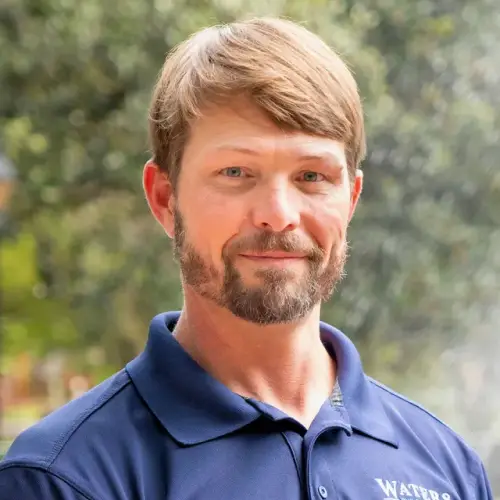
Josh Waters | Waters Building + Design
Places You Can find us




We think you’d also like this

How to create a house renovation project plan
Get expert advice on planning and executing a house renovation project plan for your next remodel – no matter the size of the project.

3 home renovation nightmares and how to avoid them
Don’t let your projects become the boogeyman. Here’s how home remodeling apps can turn nightmares into dream jobs.

Project management doesn’t have to be scary
Even on Halloween, don’t project management scare you! We can help you live in a world without project nightmares and scares. Find out how.